
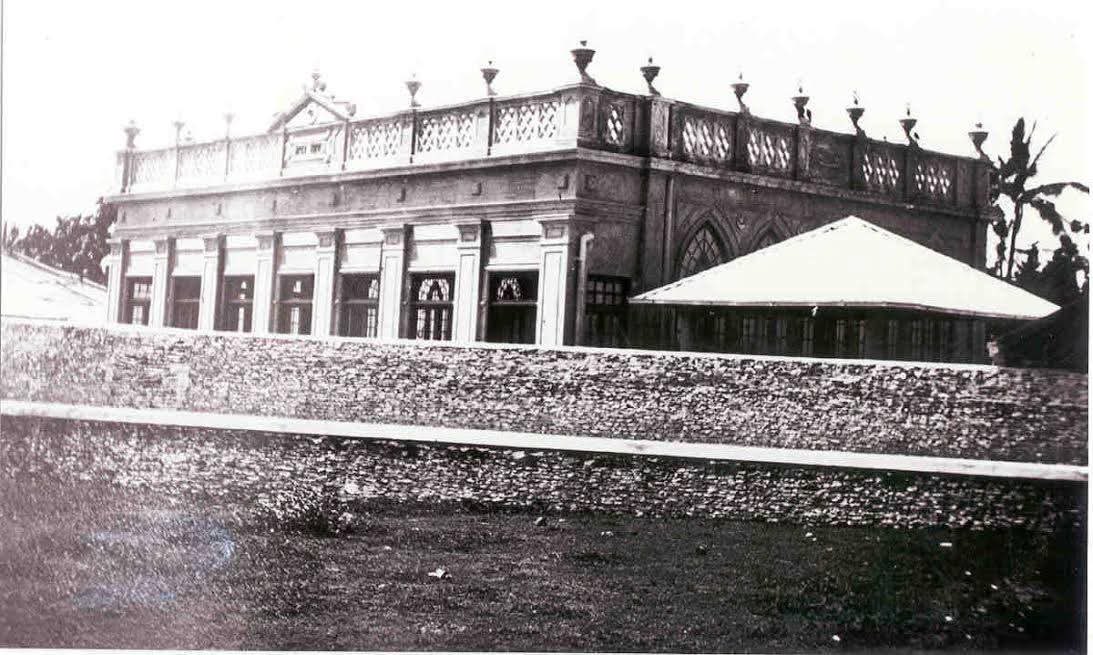
Bandaara Miskiy, officially known as Masjid Al-Sultan Mohamed Shamsuddeen, is one of the most unusual historic mosques in Malé. Unlike the ancient coral stone mosques found across the Maldives, Bandaara Miskiy represents a different chapter of the country’s history – one shaped by international trade, migration, and cultural exchange.
Built in 1927, the mosque is approaching a century of existence and remains one of the few historical landmarks still standing in the Maldivian capital.
Built During the Reign of Sultan Mohamed Shamsuddeen III
Bandaara Miskiy was constructed in 1927 during the reign of Sultan Mohamed Shamsuddeen III.
The mosque was originally built by Dawoodi Bohra merchants, a trading community that had settled in Malé after receiving permission from the Maldivian government in 1857.
At the time, the mosque was known as Bunbaa Mosque and served the religious needs of the Bohra community living in the capital.
For several decades, the mosque functioned as a place of worship for this merchant community, reflecting the commercial links that connected the Maldives with traders from the wider Indian Ocean region.
Distinctive Architecture in the Maldives
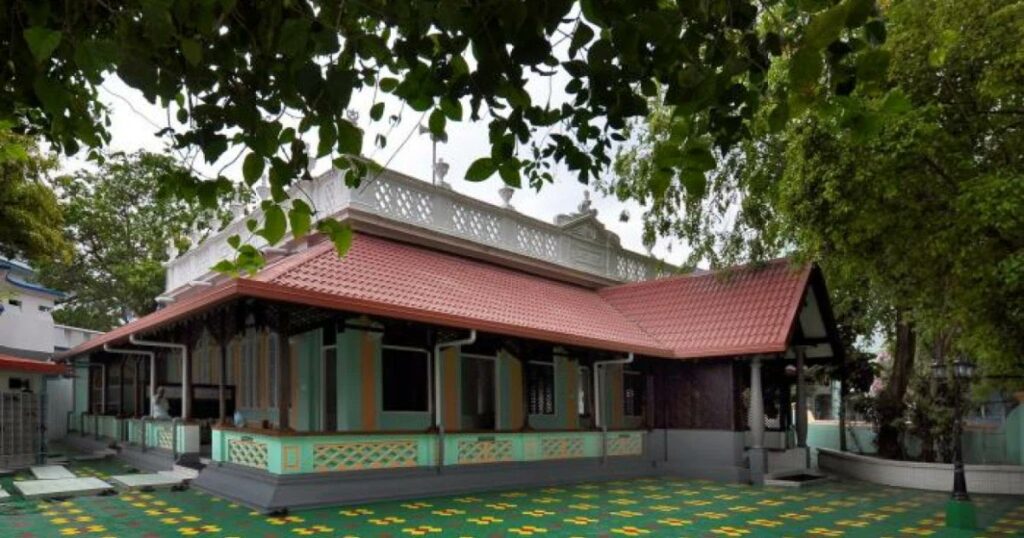
Bandaara Miskiy stands out from most Maldivian mosques because its architecture is very different from traditional island mosque designs.
Some of its notable features include:
- Red-tiled roof, uncommon for Maldivian mosques
- Green-painted openwork balcony
- A veranda surrounding three sides of the building
- A design style influenced by South Asian architecture
These features make the mosque visually distinctive in Malé, where most historical mosques were built using coral stone.
From Bunbaa Mosque to Bandaara Miskiy
The Bohra community used the mosque for approximately 35 years.
However, in 1962, the business permits of Bohra merchants in the Maldives were cancelled, leading to their departure from the country. After they left, the mosque remained unused for a period of time.
Later, the mosque was adapted for local Muslim use and renamed Bandaara Miskiy.
- The mosque reopened to the public on 12 January 1967
- Friday (Jumah) prayers began on 7 December 1968
Since then, it has functioned as a Sunni mosque serving the local community in Malé.
Debate Over Demolition
Recently, Bandaara Miskiy has become the center of a public debate.
Authorities announced plans to demolish the mosque and build a larger modern mosque at the same site after receiving funding from a private donor.
This proposal sparked strong reactions from historians, heritage advocates, and members of the public who believe the mosque should be preserved due to its historical importance.
Several historians and former government officials have argued that Bandaara Miskiy represents a rare part of Maldivian history and one of the few remaining historic structures in Malé.
The issue has also led to an online campaign calling for the mosque’s protection under the hashtag #SaveBandaaraMiskiy.
A Symbol of Cultural Connections
Beyond its role as a place of worship, Bandaara Miskiy represents a reminder of the multicultural influences that shaped Malé through trade and migration.
Its story reflects the connections between the Maldives and the wider Indian Ocean world – especially merchant communities who contributed to the country’s commercial and cultural life.
As the debate about its future continues, Bandaara Miskiy stands not only as a mosque, but also as a symbol of a lesser-known chapter of Maldivian history.
Have any thoughts?
Share your reaction or leave a quick response — we’d love to hear what you think!
-
 0
0
-
 0
0
-
 0
0
-
 0
0
-
 0
0
-
 0
0