
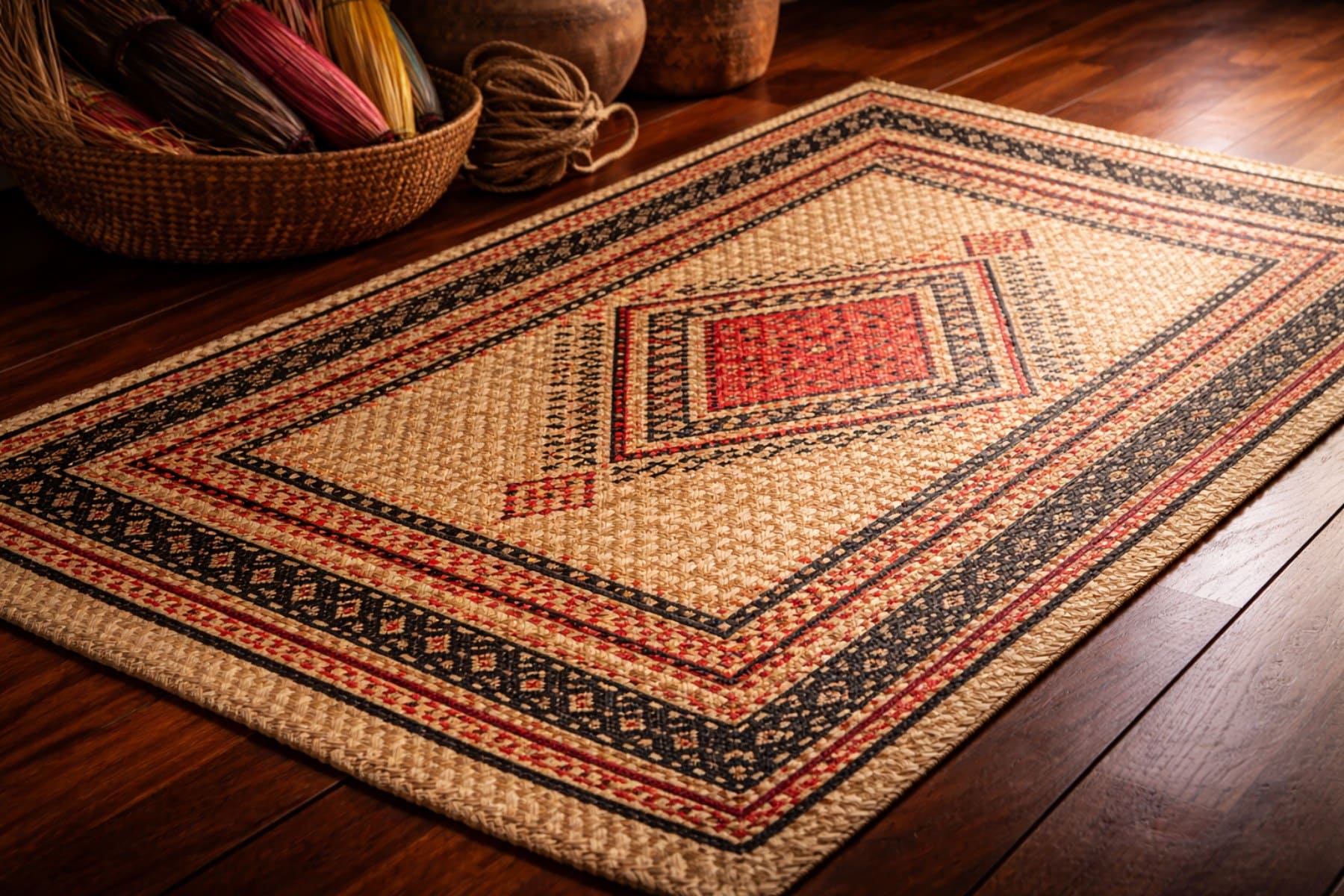
Before sofas and factory-made furniture, Maldivian homes were lined with something softer, simpler, and entirely handmade – Kunaa, the traditional woven mat.
Made from natural reeds and coloured with plant dyes, Kunaa was more than decoration. It was comfort, status, and craftsmanship woven into daily life.
From Reed to Masterpiece
Kunaa weaving begins with haa (reed), carefully harvested, dried, and split into thin strands. These strands are then dyed using natural pigments – traditionally red, black, yellow, and brown – and woven into intricate geometric patterns.
The process requires patience and precision. A single mat can take weeks to complete.
Each design tells a story. Patterns vary by island, with some communities becoming famous for their distinctive styles.
A Symbol of Hospitality
In traditional Maldivian homes, Kunaa was laid across floors, placed in sleeping areas, and even presented as gifts during weddings.
To sit on a finely woven Kunaa was to feel both comfort and respect. It symbolised warmth and welcome.
In earlier times, the quality of Kunaa in a home reflected the skill and dedication of its women – weaving was often passed from mother to daughter.
An Art That Endures
Though modern furniture has replaced woven mats in many homes, Kunaa remains a treasured cultural art form. Today, it is recognised as one of the Maldives’ most important traditional crafts.
Some Kunaa pieces are now displayed as art – hung on walls rather than spread across floors – admired for their symmetry and heritage.
Threads of Identity
Kunaa represents something deeper than weaving. It reflects the Maldivian way of life: resourceful, patient, connected to nature.
From simple reeds grew something lasting.
And in every woven strand lies a quiet reminder of island resilience.
Have any thoughts?
Share your reaction or leave a quick response — we’d love to hear what you think!
-
 1
1
-
 0
0
-
 0
0
-
 0
0
-
 0
0
-
 0
0