
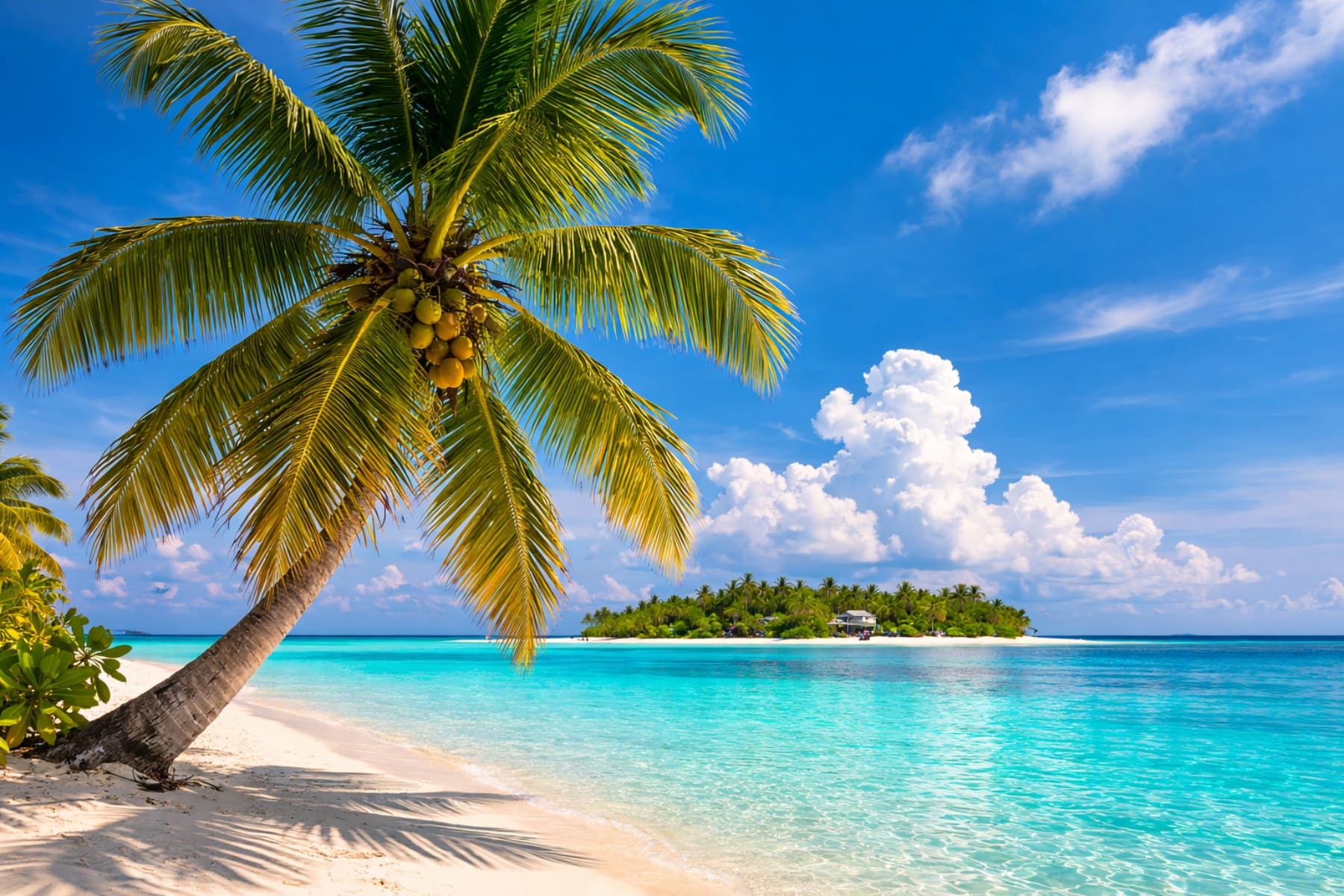
Across the Maldives, one tree appears everywhere – along beaches, beside homes, and rising above island skylines.
The coconut tree, locally known as Ruh, has long been more than a plant. For generations, it was a source of food, shelter, tools, and livelihood.
In many ways, the coconut tree helped shape island life.
A Tree of Survival
Before modern imports and construction materials, island communities depended heavily on coconut trees.
Almost every part of the tree served a purpose.
The fruit provided water, milk, and oil. Coconut flesh became an essential ingredient in Maldivian cuisine. From curries to desserts, coconut remains central to daily meals.
Even the husk and shell were useful – turned into rope, fuel, or household items.
Building Island Homes
Traditional Maldivian houses once relied heavily on materials from the coconut tree.
The strong timber was used for beams and structure. Leaves were woven into roofing thatch. The fibrous husk was twisted into rope known as roanu, used for tying boats, securing roofs, and building fishing equipment.
Before imported materials arrived, the coconut tree was one of the islands’ most reliable construction resources.
Supporting Fishing and Boats
Fishing, the historic backbone of the Maldivian economy, also depended on coconut materials.
Boatbuilders used coconut wood in traditional dhoanis. Rope made from coconut fibre was used for sails, fishing gear, and boat rigging.
Even fishing floats and simple tools were sometimes crafted from coconut shells.
A Cultural Symbol
Beyond practical use, the coconut tree became a symbol of island identity.
Its silhouette against the horizon is instantly recognisable. Palm-lined beaches are part of how the Maldives is imagined around the world.
For Maldivians, however, the coconut tree represents something deeper – resilience and self-sufficiency.
It reminds people of a time when island communities depended primarily on local resources.
Protecting Island Environments
Coconut trees also play an environmental role.
Their roots help stabilise sandy soil and protect shorelines from erosion. They provide shade and habitat for birds and other island wildlife.
In small coral islands where soil is thin and fragile, the coconut tree remains one of the most adaptable and valuable plants.
A Living Part of Island Life
Today, modern materials and imported goods have replaced many traditional uses of the coconut tree.
Yet its presence remains constant.
Children still climb them for coconuts. Island paths still wind through palm groves. And the gentle sway of coconut leaves remains one of the most familiar sounds in the Maldives.
The coconut tree may seem ordinary.
But for generations of islanders, it helped make life possible.
Have any thoughts?
Share your reaction or leave a quick response — we’d love to hear what you think!
-
 2
2
-
 1
1
-
 0
0
-
 0
0
-
 0
0
-
 0
0