
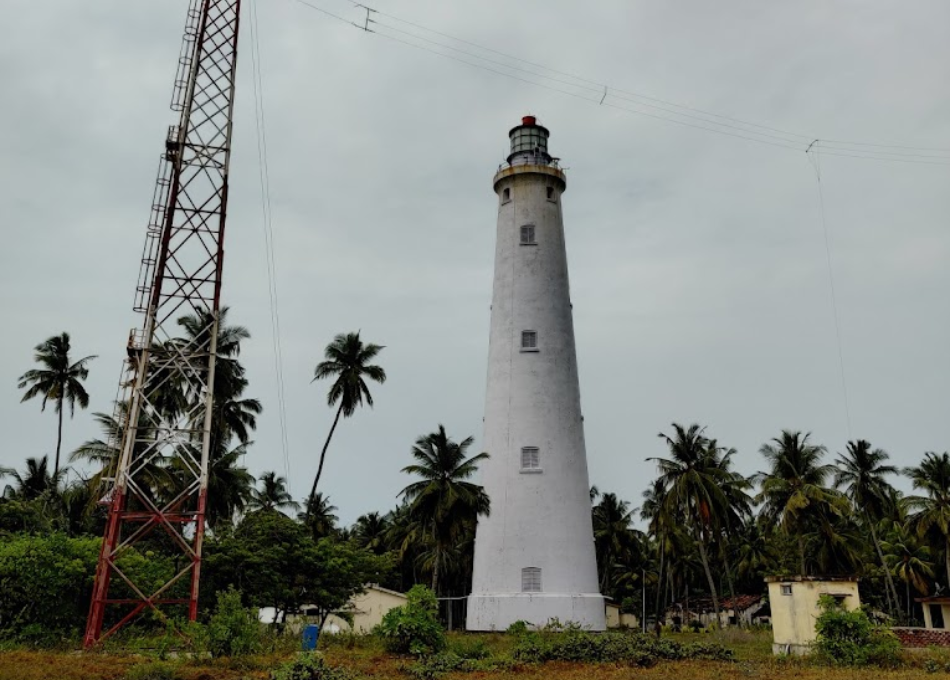
Separated by political boundaries but connected by language, faith, family and centuries of shared history, Maliku holds a special place in the Maldivian story – including the struggle that restored our nation’s independence in 1573.
To many people around the world, Minicoy is simply an island in India’s Lakshadweep archipelago.
But to Maldivians, it is known by another name.
Maliku.
A name that carries memories of shared ancestry, centuries of family connections and a chapter of Maldivian history that deserves far greater recognition.
For generations, the people of Maliku and the Maldives have shared a language, religion, cultural traditions and family relationships. Even today, families on both sides of the international border can trace their connections to one another.
And during one of the darkest periods in Maldivian history, Maliku played an important role in the struggle to free the Maldives from Portuguese control.
The island’s political circumstances have changed over the centuries.
But its Maldivian heritage remains deeply rooted.
An Island Connected to the Maldivian World
Located north of Thuraakunu, the northernmost inhabited island of the Maldives, Maliku occupies a distinctive position in the Indian Ocean.
Geographically, it lies between the Maldivian archipelago and the Lakshadweep islands administered by India.
Culturally and historically, however, Maliku has maintained a particularly close relationship with the Maldives.
Historical research confirms that Maliku was once part of the Maldivian realm. Its people participated in the wider cultural and religious history of the Maldives, including the transition to Islam beginning in the twelfth century.
The island’s connections with Malé and the northern Maldivian atolls were maintained through trade, seafaring, marriage and family relationships.
For centuries, these communities were connected by the ocean rather than separated by the international borders familiar today.
Maliku’s history cannot be fully understood without recognising these relationships.
One Language, Shared Cultural Roots
Perhaps the most remarkable connection between Maliku and the Maldives is language.
The people of Maliku speak Mahl, widely recognised as a dialect of Dhivehi, the national language of the Maldives.
Although the Maliku dialect has developed its own pronunciation, vocabulary and expressions, its linguistic roots remain closely connected to Dhivehi.
A study published in The Maldives National Journal of Research examined the relationship between standard Dhivehi and the Maliku dialect, identifying substantial similarities and evidence of older Dhivehi vocabulary preserved within the island’s speech.
This linguistic connection is more than a historical curiosity.
Language carries the memories of a people.
It preserves family relationships, traditions, expressions, stories and ways of understanding the world.
Beyond language, Maliku shares a wider cultural heritage with the Maldives.
Islam remains central to community life. Fishing and seafaring have shaped generations of livelihoods. Traditional celebrations, music, clothing, boatbuilding and social customs reflect longstanding connections with Maldivian society.
At the same time, Maliku has developed its own distinctive cultural practices over centuries of geographical and political separation.
These differences do not diminish the shared heritage.
They demonstrate how closely related communities can preserve common roots while developing their own identities.
For Maldivians, the people of Maliku are not simply distant neighbours.
They are part of the wider Dhivehi cultural family.
Maliku’s Role in the Liberation of the Maldives
One of the strongest historical connections between Maliku and the Maldives emerges from the sixteenth century.
In 1558, Portuguese forces established control over Malé, beginning a period remembered in Maldivian history for foreign domination and resistance.
The struggle to restore Maldivian independence became associated with Muhammad Thakurufaanu, his brothers and their supporters.
Maliku played an important role in this resistance.
According to historical accounts, Muhammad Thakurufaanu and his brothers travelled to Maliku during the period of Portuguese control.
The island provided refuge and support to the resistance leadership.
A particularly significant account appears in the traditional story of Muhammad Thakurufaanu (Bodu Thakurufaanu Vaahaka), recorded by Burara Mohamed Fulhu.
It describes the arrival of the brothers aboard the famous vessel Kalhuoffummi.
When they reached Maliku, the islanders welcomed them and helped establish a residence where they could remain safely.
The account describes local people gathering building materials, including coconut timber and coral stone, to construct what became known as Dhivehi Ganduvaru, or the Maldivian Palace.
This was more than an act of hospitality.
It represented practical support for people involved in the struggle to restore the Maldives’ independence.
The island provided shelter, resources and a place of security at a time when the resistance faced considerable danger.
Historical accounts also record that Muhammad Thakurufaanu and his brothers subsequently continued their campaign against Portuguese control.
The struggle ultimately culminated in the recapture of Malé in 1573.
The role of Maliku deserves recognition within this history.
When Maldivians remember Muhammad Thakurufaanu and the sacrifices associated with the liberation of our country, the support provided by the people of Maliku should not be overlooked.
Maliku was not merely watching Maldivian history unfold. Its people contributed to one of its defining chapters.
From Maliku to Addu: A Shared Historical Realm
Historical Maldivian records also preserve an important expression associated with the country’s former territorial identity.
From Maliku to Addu.
Variations of this wording appeared in royal documents referring to the northern and southern limits of the Maldivian realm.
The expression reflects a historical understanding of the Maldives extending from Maliku in the north to Addu in the south.
However, the actual exercise of political authority over Maliku changed at different times.
By the sixteenth and seventeenth centuries, the island had developed a complex relationship with the Ali Rajas of Cannanore, maritime rulers based on the southwest coast of India.
Maliku’s political connections with these rulers did not immediately erase its continuing family, cultural and diplomatic relationships with the Maldives.
Historical travellers also recorded these connections.
The French traveller François Pyrard de Laval, who visited Maliku in the early seventeenth century, described its inhabitants as sharing the language and customs of the Maldives.
He also recorded that the island had previously belonged to the Maldivian realm, although it was then under the authority of the ruler of Cannanore.
These historical accounts provide valuable evidence of Maliku’s earlier Maldivian connections.
They also demonstrate why the island’s political history cannot be reduced to a single event or simple explanation.
How Political Separation Took Shape
The separation of Maliku from the Maldives developed over a prolonged period involving regional rulers, colonial administration and the emergence of modern nation-states.
Control associated with the Ali Rajas was gradually overtaken by British authority.
Maliku subsequently became part of British India, and later came under the administration of independent India.
In 1956, the island was included in the newly established Union Territory of Laccadive, Minicoy and Amindivi Islands.
That territory was renamed Lakshadweep in 1973.
The circumstances of Maliku’s incorporation into the modern Indian administrative system remain a subject of historical discussion.
A major study published in 2024 by researchers Frank Heidemann and Muhammad Naajih examined historical records and oral accounts from the island.
The researchers found that some elderly residents had no personal recollection of the referendum commonly associated with the island’s political status in 1956.
This does not, by itself, establish a different legal status, but it highlights gaps in the historical documentation and the importance of further research.
Another important development occurred in 1976, when India and the Maldives signed an agreement establishing their maritime boundary.
India’s Ministry of External Affairs describes that agreement as resolving the earlier Maldivian claim to Minicoy.
Today, Maliku is part of India’s Lakshadweep Union Territory.
These are important realities of its modern political status.
Yet political administration and cultural heritage are not the same thing.
The existence of an international border does not remove the shared history that preceded it.
Families Connected Across Generations
For many Maldivians, Maliku’s importance is deeply personal.
The connections between the island and the Maldives are not confined to historical records or political discussions.
They are found in families.
Over generations, people travelled between Maliku and the Maldivian islands for marriage, trade, religious activities and other purposes.
Some established homes in Malé. Others maintained relationships with communities in the northern atolls and elsewhere across the country.
Historical research has identified family genealogies connecting Maliku with Malé, Huvadhoo, Fuvahmulah, Addu and other parts of the Maldives.
These relationships continued despite changes in political authority.
Even today, families retain knowledge of relatives across the border.
For those families, Maliku is not merely a location on a map.
It is connected to their ancestry.
The separation of territories did not mean the disappearance of kinship.
It meant that families who once lived within a closely connected maritime world increasingly found themselves living under different national administrations.
And yet, their shared history endured.
Preserving the Language and Heritage of Maliku
The preservation of Maliku’s distinctive language and cultural heritage remains important.
In 2025, proposed changes to school language instruction in Lakshadweep sparked protests and legal challenges concerning the place of Mahl and Arabic in education.
Residents and community representatives raised concerns about the implications for their cultural and linguistic identity.
The Kerala High Court subsequently deferred implementation of the disputed educational directive while the matter was examined.
The controversy highlighted the importance that Maliku’s people place on preserving their language.
For Maldivians, this concern is particularly meaningful.
Mahl is part of the wider Dhivehi linguistic heritage.
Its continued use preserves a branch of a shared cultural history that developed over centuries.
Protecting that heritage does not require denying Maliku’s present political status or its own distinct island identity.
It requires recognising the value of its language, traditions and historical connections.
More Than a Question of Borders
The story of Maliku is sometimes discussed primarily in terms of sovereignty and territorial history.
These questions are important, but they should not overshadow the people themselves.
Maliku is home to a community with its own experiences, aspirations and identity.
Its residents are citizens of India today, and their individual understanding of their identity deserves respect.
At the same time, the island’s historical place within the wider Maldivian cultural world is well documented.
Both realities can be acknowledged.
For Maldivians, recognising Maliku’s heritage is not necessarily about demanding a change to modern boundaries.
It is about remembering our shared history, recognising family connections and acknowledging the contribution of Maliku’s people to the story of the Maldives.
It is also about ensuring that future generations understand that our cultural history has never been confined entirely to the borders drawn on modern maps.
A Shared History That Deserves to Be Remembered
Maliku’s story is one of language, ancestry, faith, resilience and historical change.
Its people share deep cultural roots with the Maldives.
Its families have maintained connections across the ocean for generations.
And during the struggle against Portuguese control, the island provided meaningful support to those who fought to restore Maldivian independence.
These are not details that should be forgotten.
They are part of the historical relationship between Maliku and the Maldives.
The international border between the two countries is a modern political reality.
The history connecting their people is much older.
For Maldivians, Maliku is more than an island beyond our northern frontier. It is part of our shared cultural heritage, part of our family history and part of the story of how our nation regained its freedom.
The sea connects what political borders separate.
Historical References
- Frank Heidemann and Muhammad Naajih (2024), Minicoy from Prehistory to 1973: The Political History of a Small Coral Island in the Indian Ocean. South Asia Chronicle.
- Aminath Riyaz, Ahmed Hashim and F. G. Mohamed, Comparative Historical Dialectology of Standard Dhivehi and the Maliku Dialect (Mahl Language). The Maldives National Journal of Research.
- François Pyrard de Laval, early seventeenth-century accounts of the Maldives and Maliku, as examined in Heidemann and Naajih (2024).
- Ministry of External Affairs, Government of India, India-Maldives Bilateral Relations, March 2024.
- Kerala High Court, W.P.(PIL) No. 48 of 2025, order dated 9 June 2025.
Have any thoughts?
Share your reaction or leave a quick response — we’d love to hear what you think!
-
 1
-
 1
-
 0
-
 0
-
 0
-
 0