
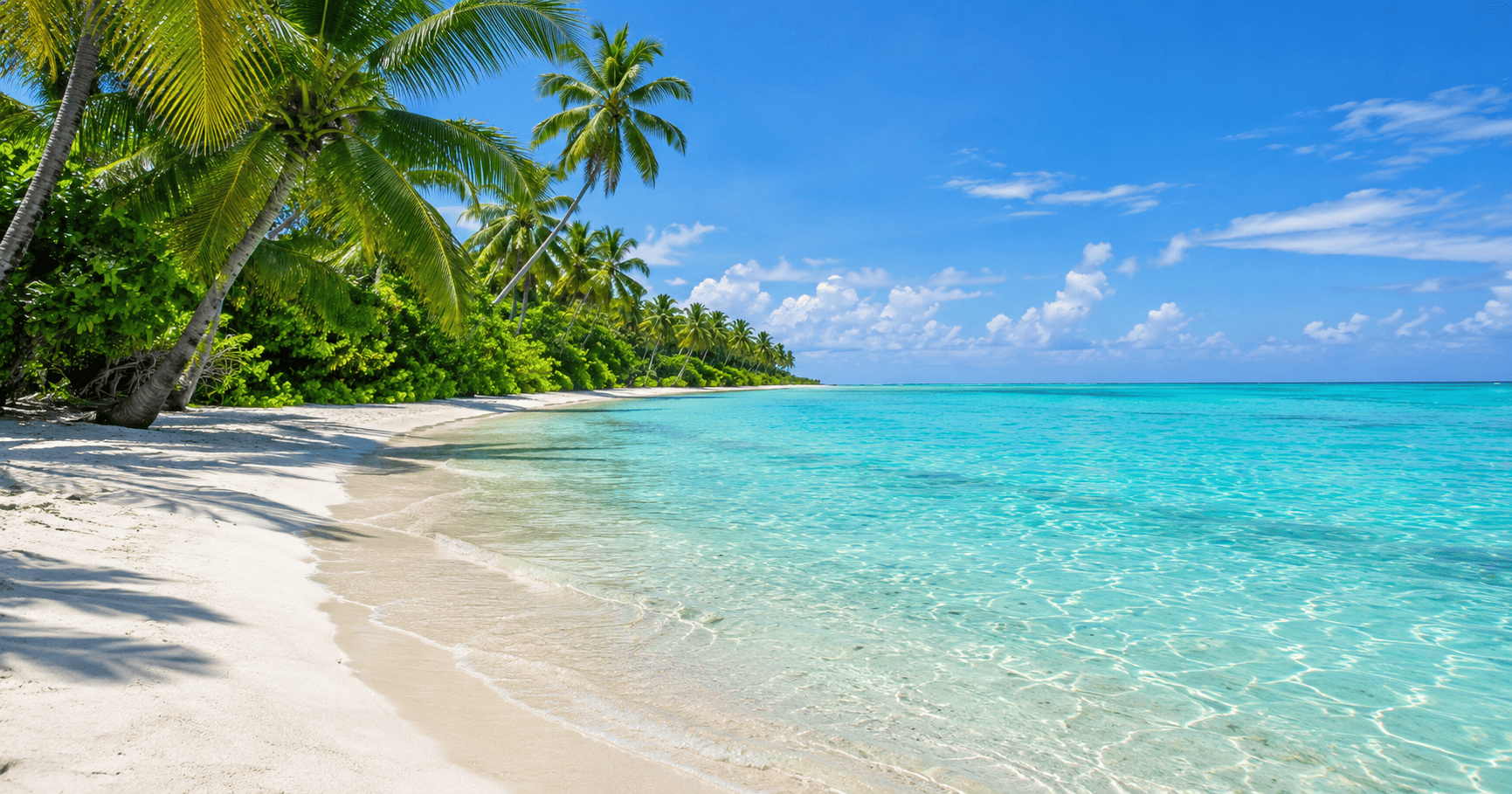
In the heart of South Ari Atoll, a remarkably long island offers a beautiful combination of tropical scenery, traditional community life and encounters with some of the ocean’s most magnificent creatures.
Some islands are remembered for their beaches. Others for their history, culture or marine life.
Dhigurah offers something special: a remarkable combination of all three.
Located in Alifu Dhaalu Atoll, also known as South Ari Atoll, Dhigurah is one of the Maldives’ most distinctive inhabited islands.
Its name translates to “long island” in Dhivehi, a fitting description for a narrow stretch of land extending approximately three kilometres through turquoise waters.
With white sandy beaches, lush tropical vegetation and a spectacular sandbank stretching into the lagoon, Dhigurah offers scenery that many travellers associate with exclusive resorts.
Yet it remains a living Maldivian community, where everyday island traditions continue alongside a growing local tourism industry.
Perhaps most remarkably, Dhigurah lies beside one of the world’s best-known locations for year-round whale shark sightings.
An Island That Lives Up to Its Name
Dhigurah’s geography is among its most recognisable features.
Unlike many compact Maldivian islands, Dhigurah stretches as a long, narrow strip of land, with the surrounding ocean never far away.
The island is approximately 97 kilometres southwest of Malé.
Dense tropical greenery covers much of its length, while sandy paths wind beneath coconut palms and coastal vegetation.
The main residential area occupies one end of the island, leaving long stretches of natural shoreline and greenery extending towards the southern tip.
There, the land gradually gives way to a beautiful sandbank surrounded by shallow turquoise water.
This remarkable landscape is one of the reasons Dhigurah has become increasingly popular among travellers looking to experience the natural beauty of the Maldives beyond private resorts.
The Extraordinary Sandbank of Dhigurah
One of Dhigurah’s most photographed attractions is its long, sweeping sandbank.
Extending from the southern end of the island, this natural formation creates a striking landscape where white sand meets the Indian Ocean.
The surrounding water changes colour with its depth, creating shades of pale turquoise, brilliant blue and deeper ocean tones.
For visitors, the sandbank offers an opportunity to experience the Maldives at its most peaceful.
Walking along the beach, watching the changing colours of the lagoon or simply enjoying the open horizon can be an unforgettable experience.
The appearance and accessibility of the sandbank change with tides, currents and weather conditions.
Visitors should check local advice before walking towards the far end, particularly during high tide or rough weather.
The sandbank is also a reminder that Maldivian islands are constantly shaped by the natural movement of sand, waves and currents.
A Gateway to the Gentle Giants
Dhigurah is internationally recognised for its proximity to one of the Maldives’ most important marine environments.
The South Ari Marine Protected Area (SAMPA) is particularly famous for its whale shark population.
Unlike many destinations where whale shark sightings are strongly seasonal, the waters of South Ari Atoll are known for sightings throughout the year.
Whale sharks are the largest living fish in the ocean.
Despite their extraordinary size, they are filter feeders that consume plankton and other small marine organisms.
For visitors, encountering one of these gentle giants underwater can be a remarkable experience.
Dhigurah provides convenient access to organised whale shark excursions, allowing travellers to explore the protected marine environment with experienced guides.
However, whale sharks are wild animals, and sightings can never be guaranteed.
Their presence depends on natural behaviour, ocean conditions and other environmental factors.
The opportunity to encounter these creatures is a privilege that comes with a responsibility to protect them.
Responsible Whale Shark Encounters
As marine tourism grows, protecting whale sharks and their habitat becomes increasingly important.
The South Ari Marine Protected Area was established in 2009 to help protect the region’s marine biodiversity, particularly its important whale shark aggregation.
Visitors joining excursions should choose operators who follow official conservation guidelines.
During encounters, swimmers should maintain a safe distance, avoid touching the animals and never obstruct their movement.
Guidance recommends keeping at least three metres from a whale shark’s body and four metres from its tail.
Flash photography and behaviour that disturbs marine wildlife should also be avoided.
Responsible tourism allows visitors to appreciate these remarkable animals while helping preserve the marine environment for future generations.
A World Beneath the Surface
Although whale sharks are a major attraction, the surrounding waters offer much more.
South Ari Atoll is renowned for its diving and snorkelling opportunities, with coral reefs supporting a wide variety of marine life.
Depending on the location and conditions, visitors may encounter reef sharks, sea turtles, manta rays and colourful tropical fish.
Experienced dive operators provide access to different underwater environments, from shallow coral gardens to deeper reef formations.
For visitors who prefer snorkelling, guided excursions offer an opportunity to discover the marine environment without requiring scuba diving certification.
However, ocean currents, visibility and weather conditions vary.
It is important to follow local safety advice and avoid entering unfamiliar waters without appropriate guidance.
The beauty of Dhigurah’s surrounding ocean lies not only in the animals visitors hope to see, but also in the remarkable marine ecosystem that supports them.
Experience Authentic Maldivian Island Life
Despite its growing popularity as a tourist destination, Dhigurah remains an inhabited island with a distinct community identity.
Unlike exclusive resort islands, visitors can experience the atmosphere of everyday Maldivian life.
Local cafés, small shops, residential streets and community spaces form part of the island’s character.
Fishing and other maritime activities have long been connected to the livelihoods of communities throughout South Ari Atoll.
Today, tourism provides additional economic opportunities through guesthouses, restaurants, diving centres, transport services and other locally operated businesses.
For visitors, staying on a local island also provides opportunities to discover Maldivian hospitality and traditional food.
A morning breakfast of mas huni and roshi, an afternoon tea accompanied by hedhikaa, or an evening walk through the island can become memorable experiences.
Dhigurah offers more than a beautiful destination.
It offers a window into the Maldives as a country of living communities.
Getting to Dhigurah
Dhigurah can be reached from the Malé area through several transportation options.
Shared speedboat: Scheduled speedboat transfers generally take approximately two to two and a half hours, depending on the operator, weather and route.
Domestic flight: Travellers can fly from Velana International Airport to Maamigili Airport in South Ari Atoll, followed by a short boat transfer to Dhigurah.
Other arranged transfers: Certain accommodation providers can organise alternative connections, depending on availability and operational arrangements.
Visitors should confirm transfer schedules and prices with their guesthouse or transport provider before travelling.
Boat services may change because of weather conditions, demand or operational requirements.
Planning transportation in advance is especially important when connecting with international flights.
When Is the Best Time to Visit Dhigurah?
Dhigurah can be visited throughout the year.
Like the rest of the Maldives, it experiences tropical temperatures and seasonal weather changes influenced by the monsoons.
The northeast monsoon generally brings drier conditions during the early months of the year, making this a popular period for beach holidays and marine excursions.
The wetter season can bring heavier showers, stronger winds and changing sea conditions.
However, the surrounding marine environment remains active throughout the year.
One of Dhigurah’s greatest attractions is the possibility of whale shark encounters in different seasons.
Visitors should remember that weather, underwater visibility and marine wildlife sightings are never entirely predictable.
For the best experience, consider spending several days on the island rather than relying on a single excursion.
Things to Do in Dhigurah
Whether travelling for relaxation or adventure, Dhigurah offers a variety of experiences.
- Walk along the island’s beautiful sandy beaches.
- Explore the spectacular southern sandbank.
- Join a responsible whale shark snorkelling excursion.
- Discover nearby dive sites with qualified operators.
- Enjoy guided snorkelling trips around coral reefs.
- Experience local Maldivian food and hospitality.
- Watch the sunrise or sunset over the surrounding ocean.
- Explore the island’s peaceful streets and natural scenery.
Visitors should respect local customs when exploring the inhabited areas.
Conventional swimwear is appropriate at designated tourist beaches, while modest clothing is expected in residential and public community areas.
As on other inhabited Maldivian islands, alcohol is not available through ordinary local guesthouses and restaurants.
A Destination Worth Protecting
Dhigurah’s growing popularity presents opportunities for the island’s economy and community.
Guesthouse tourism supports local employment and allows more Maldivians to participate directly in the country’s tourism industry.
However, increasing visitor numbers also create environmental responsibilities.
Protecting beaches, preventing pollution, managing waste and ensuring respectful marine wildlife encounters are essential to the island’s future.
The appeal of Dhigurah depends heavily on the condition of its natural environment.
Its beaches, sandbank, reefs and marine biodiversity are not simply tourist attractions.
They are valuable natural assets that deserve careful protection.
Sustainable tourism can help ensure that economic opportunities develop alongside environmental responsibility.
Where Island Life Meets Ocean Adventure
There is something remarkable about Dhigurah.
A narrow island surrounded by the vast Indian Ocean, where peaceful beaches extend towards the horizon and extraordinary marine life thrives just beyond the reef.
It is a place where visitors can experience the natural beauty of the Maldives while discovering the atmosphere of a genuine island community.
For some, the highlight will be the sandbank.
For others, it will be the unforgettable sight of a whale shark moving gracefully through the water.
And for many, it will simply be the feeling of spending time on an island where the ocean is always close.
Dhigurah reminds us that some of the Maldives’ most remarkable experiences are found not behind resort walls, but within the islands and communities that make our country unique.
Have any thoughts?
Share your reaction or leave a quick response — we’d love to hear what you think!
-
 0
-
 0
-
 0
-
 0
-
 0
-
 0